

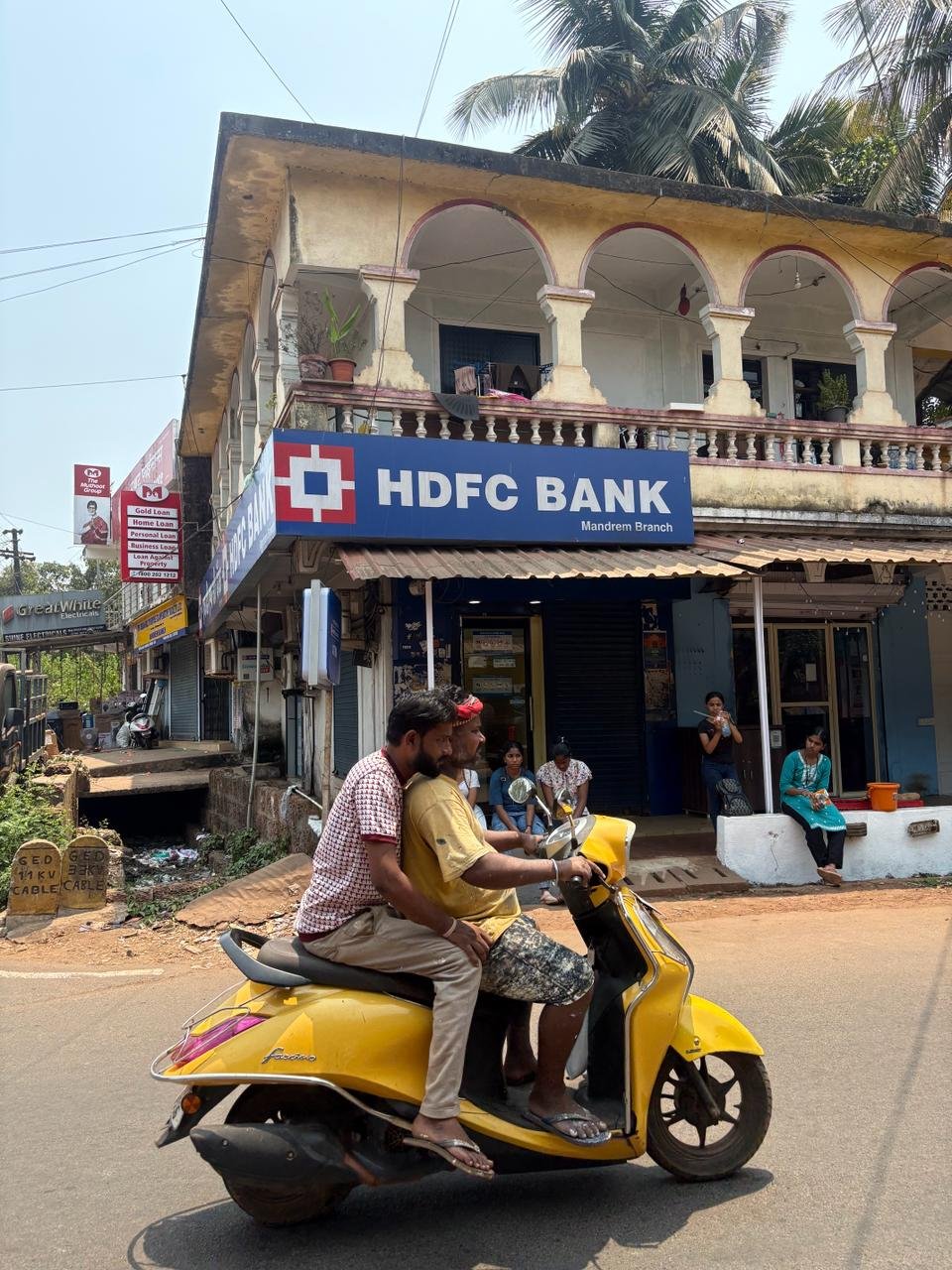
HDFC Bank, India’s largest private-sector lender by market capitalization, has found itself under significant pressure in 2026, with its share price declining sharply amid concerns over corporate governance, regulatory scrutiny, and post-merger profitability challenges.
The stock has fallen more than 23% this year and recently touched multi-year lows, surprising investors who have long viewed HDFC Bank as one of India’s most reliable banking franchises.
At its peak, HDFC Bank was not merely India’s largest private-sector lender; it was one of the world’s most valuable banks by market capitalization, ranking among the global top 10 banking institutions. Even after its recent decline, the bank remains India’s most valuable banking franchise and one of the largest financial institutions in Asia, underscoring the scale of its transformation since its founding in 1994.
Governance Concerns Trigger Fresh Selling
Investor sentiment took another hit after reports emerged regarding a ₹45 crore payment allegedly linked to efforts to attract large deposits from a state road development corporation. The reports prompted fresh concerns about governance standards within the bank.
HDFC Bank, however, strongly rejected any allegations of wrongdoing. Responding to the reports, the bank stated that it rejects any assumption of culpability and maintained that it has adhered to all applicable regulations and internal processes.
While the matter remains under scrutiny, the controversy has added to investor anxiety at a time when confidence in the stock was already fragile.
A Dramatic Change in Valuation
A few years ago, it would have been difficult to imagine HDFC Bank trading at valuation levels comparable to many ordinary banking stocks.
Today, the bank trades at approximately 14.9 times earnings and around two times book value—multiples that are significantly lower than the premium valuations investors historically assigned to the lender.
The decline reflects concerns over slower earnings growth, margin pressures, and uncertainties arising from the integration of Housing Development Finance Corporation (HDFC) into HDFC Bank.
The Reserve Bank of India (RBI) has identified the HDFC Bank, State Bank of India, and ICICI Bank as Domestic Systemically Important Banks (D-SIBs), which are often referred to as banks that are “too big to fail”.
Two Years of Limited Returns
The stock’s recent performance highlights the extent of investor disappointment.
Adjusted for the bonus issue, HDFC Bank traded at approximately ₹755 on May 28, 2024. On May 27, 2026, it was trading near ₹765, delivering virtually no return over a two-year period despite strong growth in India’s banking sector.
Such stagnation is unusual for a bank that was once considered a core long-term holding for institutional and retail investors alike.
The Post-Merger Challenge
Since the merger with HDFC Ltd., the bank has been navigating a complex transition. While the merger created a financial giant with an expanded customer base and lending capabilities, it also brought challenges.
The integration increased funding costs, compressed net interest margins, and required the bank to manage a significantly larger balance sheet. Investors are closely watching whether management can restore profitability metrics to historical levels.
What Could Drive Recovery?
Despite the near-term concerns, several factors could support a recovery in the coming years:
- Improvement in net interest margins as funding costs stabilize.
- Strong growth in retail and corporate lending.
- Benefits from merger-related synergies.
- Continued expansion of India’s banking and credit markets.
- The bank’s historically strong asset quality and risk management framework.
The Road Ahead
HDFC Bank remains one of India’s most important financial institutions, but the premium valuation it once enjoyed has been challenged by governance concerns, post-merger integration issues, and slower-than-expected earnings growth.
For investors, the key question is whether these challenges represent temporary headwinds or a structural shift in the bank’s long-term growth trajectory. The answer will likely determine whether the current valuation becomes an opportunity or a warning sign over the next three years.
Disclaimer: This article is for informational purposes only and should not be construed as investment advice or a recommendation to buy or sell any security.