

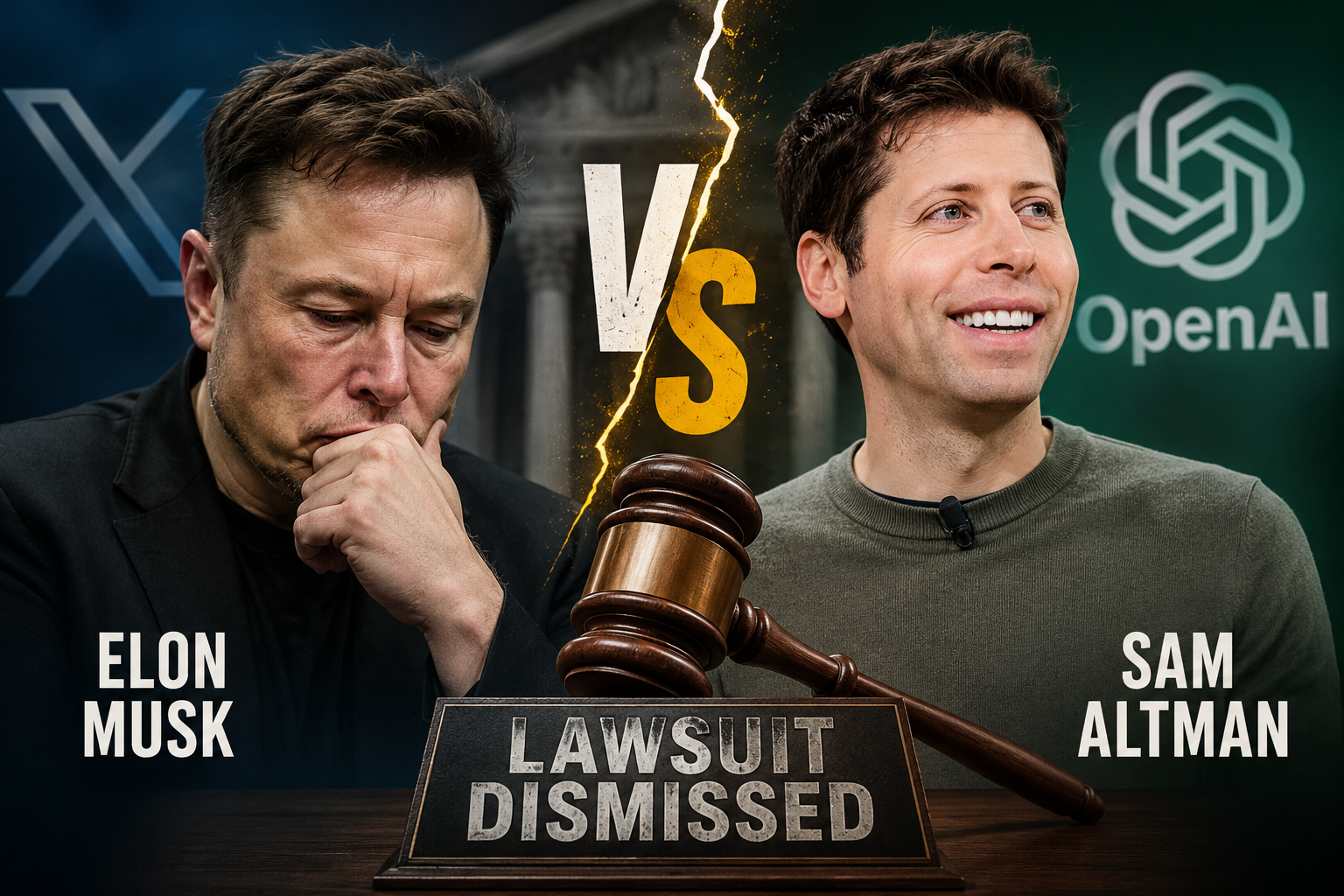
A federal jury in Oakland, California, has rejected a multi-billion-dollar lawsuit filed by Elon Musk against Sam Altman and OpenAI, ruling that Musk waited too long to bring forward his legal claims.
The unanimous verdict, delivered in May 2026 after less than two hours of jury deliberation, concluded that Musk’s allegations were barred by the statute of limitations — the legal deadline within which claims must be filed. Following the verdict, U.S. District Judge Yvonne Gonzalez Rogers formally adopted the jury’s findings and dismissed the case.
Background of the Dispute
The lawsuit stemmed from Musk’s long-running criticism of OpenAI’s transformation from a nonprofit research organization into a major commercial artificial intelligence company. Musk, who co-founded OpenAI in 2015 before later distancing himself from the organization, argued that the company had abandoned its original mission of developing AI for the benefit of humanity.
Musk’s legal team alleged that OpenAI’s partnership structures and commercial direction violated earlier understandings among the company’s founders. The lawsuit reportedly sought billions of dollars in damages.
OpenAI and Altman consistently denied wrongdoing, arguing that Musk’s claims lacked legal merit and were filed years after the alleged disputes first became publicly known.
Elon Musk and Sam Altman were once very close friends, collaborators, and mutual admirers. Long before their explosive multi-billion-dollar legal battles, they shared a deep alignment on technology and humanity. Tech circles and media platforms like CNBC and The Wall Street Journal frequently described their early dynamic as a genuine friendship and a powerful alliance.
Jury Decision
Jurors sided with the defense, determining that the claims were filed outside the legally permitted timeframe. Legal experts noted that statute-of-limitations rulings can end cases regardless of the broader arguments presented.
The quick deliberation suggested the jury found the timing issue straightforward and decisive.
Judge Gonzalez Rogers immediately accepted the verdict and dismissed the lawsuit, bringing one of the tech industry’s most closely watched legal battles to a close.
Industry Impact
The ruling is expected to strengthen OpenAI’s position as competition intensifies in the global artificial intelligence sector. The company remains one of the most influential AI firms worldwide amid growing investment and regulatory scrutiny surrounding advanced AI systems.
The case also highlighted widening tensions between some early AI researchers and the commercial realities of the rapidly expanding industry.
What Happens Next
Legal analysts say Musk could attempt an appeal, though overturning a jury decision tied to statute-of-limitations findings may prove difficult. Neither Musk nor OpenAI immediately announced further legal action following the verdict.